
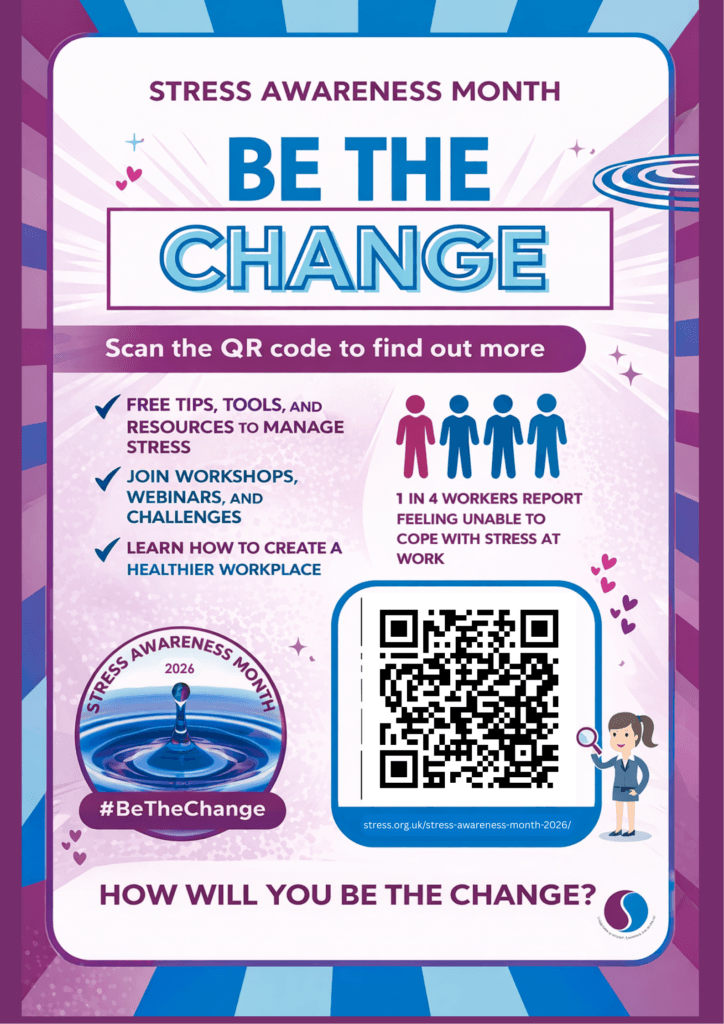
April marks the start of Stress Awareness Month, a period dedicated to increasing public awareness about the causes and cures for our modern stress epidemic. Since 1992, health professionals and advocates have used this month to highlight how stress affects our mental and physical health. This year, the call to action is simple yet profound: Be the Change.
Why “Be the Change”?
Stress is often viewed as an external force, something that happens to us. However, “Be the Change” shifts the perspective toward agency. It encourages us to transition from being passive recipients of stress to active architects of a calmer, more resilient life. By changing our individual habits, we create a ripple effect that can transform our workplaces, homes, and communities.
The Impact of Chronic Stress
According to the Mental Health Foundation, 74% of UK adults have felt so stressed at some point over the last year that they felt overwhelmed or unable to cope. Chronic stress isn’t just a “feeling”; it has tangible physical consequences, including:
- Increased risk of heart disease and high blood pressure.
- Disrupted sleep patterns and chronic fatigue.
- Weakened immune system response.
- Impacting digestive health and metabolic function.
How to “Be the Change” in Your Own Life
1. Prioritize “Micro-Breaks”
Change doesn’t require a month-long retreat. Research shows that “micro-breaks”, short, 5-minute intervals of stretching, deep breathing, or stepping away from a screen can significantly lower cortisol levels throughout the day.
2. Connect Beyond the Screen
Digital fatigue is a leading contributor to modern anxiety. Being the change means choosing a phone call over a text, or a walk in the park over a scroll through social media. Human connection is one of the most powerful “buffers” against the physiological effects of stress.
3. The Power of “No”
We often take on too much out of a sense of obligation. Setting healthy boundaries is a revolutionary act of self-care. Learning to say “no” to non-essential tasks allows you to say “yes” to your own mental clarity.
Leading Change in Your Community
To truly embody the theme, we must look beyond ourselves. You can be the change for others by:
- Starting the Conversation: Simply asking a colleague, “How are you really doing?” can break the stigma surrounding stress.
- Leading by Example: If you are in a leadership position, avoid sending emails after work hours. Show your team that rest is a prerequisite for productivity, not a reward for it.
- Sharing Resources: Direct friends or family toward professional help if they are struggling.